Vai al contenuto principale
Mercati e applicazioni

Autore: Ellis Fowler

Offene zeit: Cos'è e cosa influisce?

Può capitare di sentire l'espressione "Offene zeit" quando si parla di adesivi, ma di non sapere cosa significhi o cosa rappresenti. Offene zeit è un fattore importante da considerare quando si sceglie l'adesivo giusto per il lavoro. Di seguito, analizzeremo che cos'è Offene zeit e perché i casi d'uso e le condizioni di lavoro possono influenzarlo.

Che cos'è Offene zeit?

Offene zeit è definito come il periodo di tempo dopo l'applicazione in cui un adesivo può ancora essere manipolato. In senso più elementare, Offene zeit è l'intervallo di tempo che intercorre tra l'applicazione dell'adesivo e la sua solidificazione fino al punto in cui non potrà più aderire a un altro substrato.

Quando si esamina il sito Offene zeit di un adesivo, è importante considerare il tempo tipicamente necessario per completare l'intero processo di incollaggio dei materiali, noto anche come processo Offene zeit. Ad esempio, se si utilizza un adesivo per la chiusura di cartoni, il processo Offene zeit comprende l'erogazione dell'adesivo sul cartone, l'applicazione dell'applicatore e la chiusura del cartone per formare il legame. È quindi importante scegliere un adesivo con una Offene zeit durata superiore al processo Offene zeit.

Gli adesivi hot melt si differenziano da altre forme di adesivo perché il loro Offene zeit si basa sul tempo necessario all'adesivo per raffreddarsi e tornare solido. I tempi di apertura degli altri adesivi si basano sulla velocità di polimerizzazione o di essiccazione.

Il sito Offene zeit di un adesivo è solitamente indicato sulla confezione o nella scheda tecnica del prodotto. Tuttavia, vale la pena notare che nel settore degli adesivi non esiste un metodo prestabilito per testare Offene zeit. Ciò significa che la maggior parte dei produttori avrà una propria serie di test per determinare Offene zeit.

Cosa influenza Offene zeit?

La comprensione dei fattori che influenzano l'Offene zeit di un adesivo è fondamentale per garantire prestazioni di incollaggio ottimali.

Quando i produttori conducono i test su Offene zeit , cercano sempre di garantire che le condizioni del test rimangano costanti. Tuttavia, come già detto, non essendoci un metodo di prova prestabilito per i produttori di adesivi, ogni azienda ha le proprie condizioni, il che significa che un'altra azienda potrebbe ottenere un risultato completamente diverso.

Per quanto riguarda in particolare gli hot melt, tutto si basa sulla temperatura e sulla velocità di raffreddamento degli stessi. Per questo motivo, i fattori più comuni che influiscono su Offene zeit sono la temperatura ambiente, il materiale del substrato, la temperatura di applicazione e il volume di applicazione.

La temperatura ambiente influisce notevolmente sulla velocità con cui le fusioni a caldo iniziano a raffreddarsi e a solidificarsi. In condizioni più calde, le fusioni a caldo rimarranno fuse più a lungo, con conseguente prolungamento di Offene zeit. Al contrario, in ambienti più freddi, la fusione a caldo si raffredda più rapidamente, diminuendo la sua Offene zeit.

Lo stesso vale per i substrati da incollare. Quanto più fredda è la temperatura superficiale del substrato, tanto più rapidamente l'adesivo si solidificherà. I substrati, come il metallo, sono anche molto termoconduttivi, il che significa che assorbiranno l'energia termica dall'adesivo molto più velocemente rispetto, ad esempio, ai tessuti.

An open time factor unique to hot melts is the application temperature. Much the same as the temperature conditions of the room or substrate, the lower the application temperature, the faster the adhesive will reach its solidification temperature, decreasing open time. The low melt formulations in the Tecbond range such as LM41, LM42 and LM46 are designed to have similar open times as many of the regular Tecbond grades but at lower temperatures. For example, LM46 has a similar open time to Tecbond 240 but is designed to be applied at 130°C as opposed to 195°C.

Infine, c'è la quantità di adesivo applicato. Grandi volumi di adesivo in una singola area trattengono il calore e impiegano più tempo a raffreddarsi. Per questo motivo, nelle applicazioni di chiusura dei cartoni, consigliamo agli utenti di applicare un cordone più piccolo sul cartone prima della chiusura. In questo modo si ottiene una quantità di adesivo sufficiente a garantire un legame forte senza lunghi tempi di attesa per l'indurimento dell'adesivo.

In conclusione, l'adesivo Offene zeit svolge un ruolo cruciale in molti settori, dall'edilizia alla produzione. Prendendo in considerazione i fattori sopra descritti e conducendo test adeguati, i professionisti possono selezionare l'adesivo e la tecnica di applicazione più appropriata per ottenere i risultati desiderati.

For more information about the Tecbond adhesive range, please speak to our dedicated sales team who can guide you to the right adhesives and applicators for your task.

sales@poweradhesives.com

+44 (0)1268 885801

Tecbond 248 - L'adesivo a caldo multiuso forte e affidabile

One of the best-selling formulations in the Tecbond range, Tecbond 248 takes hot melt glue sticks to a new level in performance bonding. Used in both the construction and product assembly industries, its strong bonding properties, coupled with a good open time and fast setting speed, make it the go-to adhesive for tradespeople.

Tecbond 248 is an acrylic-based, clear hot melt adhesive designed to provide exceptional adhesion to a wide range of substrates, including many plastics that otherwise have proved difficult to bond. Excellent bonds can be achieved on wood, fabric, leather, concrete, rubber, glass, ceramics, and most metals. 248 has also been widely used on many plastics, such as PVC, polycarbonate, and acrylic thanks to its strong chemical bonding capabilities.

When working with heat-sensitive substrates, Tecbond 248 can be extruded at lower temperatures to reduce the risk of material damage. Reducing application temperature has the added benefit of increasing 248’s viscosity, negating any sag that can occur when applying to vertical surfaces. For the strongest possible bond, it is recommended to apply Tecbond 248 at the highest possible temperature (around 195°C).

The grade is the go-to for many hardwood flooring and carpet installers due to its instant grab and good open time. Once applied, 248 will maintain its high tack for around a minute, allowing flooring or tack strips to be accurately positioned before compression. Once compressed, Tecbond 248 sets almost instantly without the need for clamping or holding in place, facilitating faster working.

A completamento delle sue capacità di incollaggio, il 248 presenta un'eccellente resistenza alle basse temperature, il che significa che l'incollaggio non diventa fragile se esposto a temperature fino a -5°C.

When used with the tec range of applicators, Tecbond 248’s delivery rate speeds up the application, while its low stringing content means that no adhesive is wasted when users release the trigger. The tec range of applicators is designed to work in partnership with the Tecbond adhesive range to deliver optimal results with low effort and energy consumption. Any adhesive left in the applicator after use is not wasted but simply remelted the next time the tool is switched on. Tecbond 248 is available in 12mm and 15mm sticks and 43mm slugs.

As with a majority of adhesives in the Tecbond range, Tecbond 248 has a near-unlimited shelf life with no risk of expiring or drying out.

How does the Tecbond spray system work?

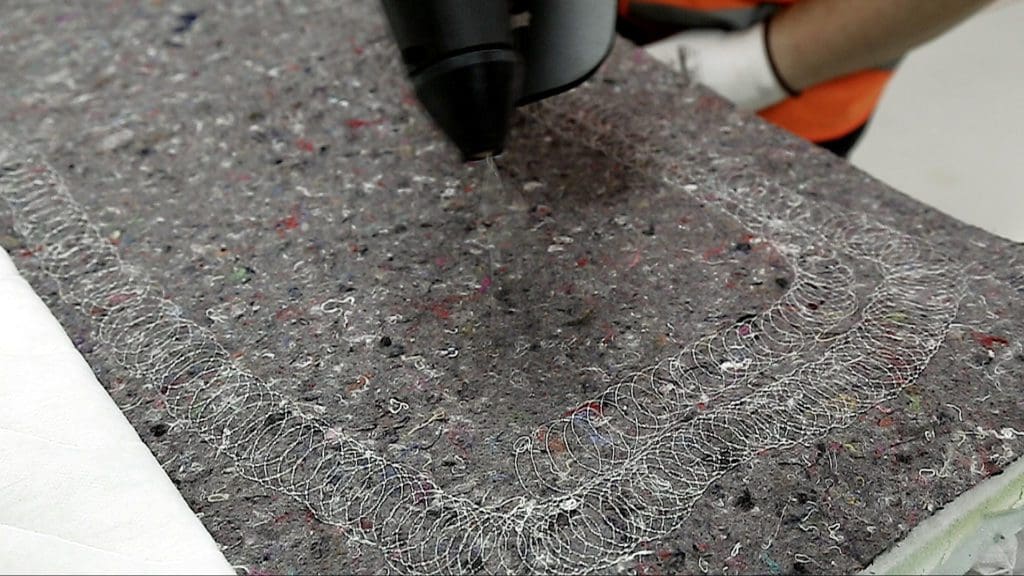
The Tecbond spray system from Power Adhesives is a pioneering, innovative, and sustainable technology to replace solvent-based aerosol adhesives. Contrary to its name, the unique application method does not atomise the adhesive but instead creates a swirl pattern, ensuring a wide area of coverage with none of the drawbacks of traditional aerosol adhesives.

Nonostante la facilità d'uso, gli adesivi spray hanno un impatto negativo sulla salute e sull'ambiente a causa del contenuto di VOC, che spinge gli utilizzatori di questi adesivi a cercare soluzioni più pulite ed economiche.

Come funziona?

Unlike aerosol adhesives in spray cans, the Tecbond spray system uses compressed air to dispense hot melt. The technology works by partnering a pneumatic, air-assisted applicator with uniquely formulated 43mm hot melt glue slugs. This size of glue ensures sufficient output without the need for a bulk melting tank.

Quando un pezzo di colla viene inserito nella camera, premendo il grilletto si invia aria compressa attraverso lo strumento, che a sua volta muove il meccanismo di alimentazione. Questo meccanismo spinge il pezzo di colla nella camera di riscaldamento termostatata. La camera mantiene una temperatura costante di 180°C per garantire la fusione dell'adesivo su richiesta.

L'adesivo ormai fuso viene quindi spinto attraverso l'ugello appositamente progettato. Mentre l'adesivo viene estruso attraverso il foro centrale, l'aria compressa viene rilasciata attraverso cinque piccole scanalature sull'anello esterno dell'ugello. In questo modo si crea un vortice intorno al cordone di adesivo, che viene spinto a formare una spirale. Questo andamento è regolabile mediante una piccola vite posta sul retro dell'applicatore, che regola la pressione del vortice d'aria.

What are the benefits of a sprayable hot melt system?

Sprayable hot melts remove the issue of VOCs commonly associated with aerosol spray adhesives and the waste product in empty cans or pots. Tecbond adhesives do not contain organic solvents or VOCs, which is not only cleaner for the environment, but also means operators can use the product without needing to wear PPE. This creates savings, and spraytec offers further value as 100% of the adhesive is used in the bonding process. This is compared to solvent-based adhesives, which contain only 30 to 40% solid contents, with the rest being VOC.

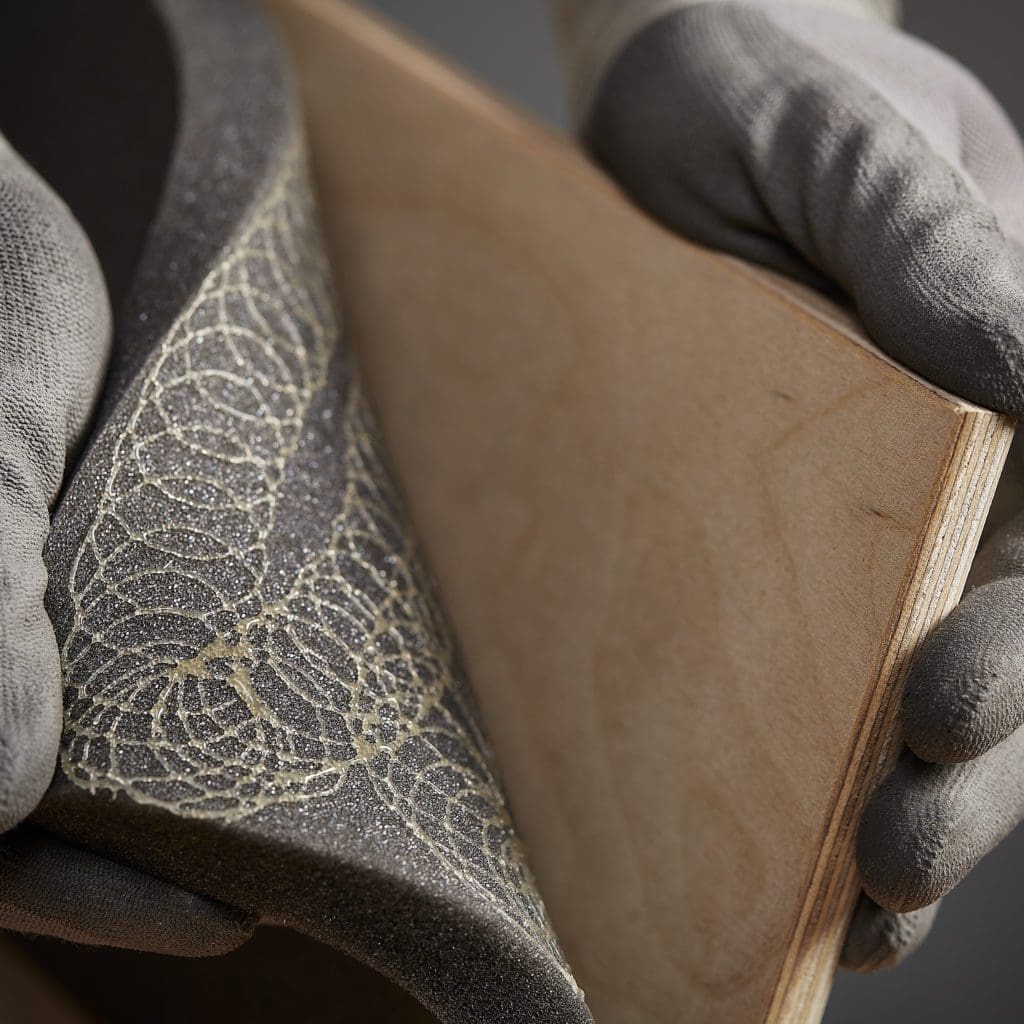
Rispetto all'applicazione di perline, la spiralizzazione dell'hot melt consente di coprire più rapidamente un'ampia superficie e di influenzare la temperatura di applicazione. Poiché l'adesivo è spiralato, si raffredda molto più rapidamente di un cordone, consentendo l'applicazione su substrati sensibili al calore, come polistirolo espanso e schiuma, senza causare danni. Un'altra proprietà unica degli adesivi Spraytec è la loro capacità di rimanere appiccicosi anche dopo che si sono raffreddati e sono diventati solidi. I gradi 420, 425 e 430 di Spraytec hanno tutti tempi di apertura di circa tre minuti o più, nonostante si raffreddino e induriscano in una frazione di tempo.

All Tecbond spray adhesives also have an unlimited shelf life. Without risk of expiry, any adhesive left in the applicator after use can simply be remelted the next time it is switched on and used as normal with no effect on the adhesive properties.

Tecbond spray adhesives have been used for over 15 years in the production of mattresses, POS stands, furniture, HVAC units and much more. The system continues to be at the forefront of what is achievable with hot melt adhesives.

For more information about our sprayable solutions, or if you would like to request a demonstration with one of our sales team, please don’t hesitate to contact us.

sales@poweradhesives.com

tel: +44 (0)1268 885801
Tecbond 410 & 420 – The sprayable hot melt adhesives

For over 10 years, Power Adhesives has been manufacturing specialised 43mm adhesive slugs designed to be applied via a unique spray-like application. The pioneering grades of this range, Tecbond 410 and Tecbond 420, not only provide users with a safer alternative to aerosol-spray adhesives thanks to their lack of harmful VOCs, but also allow them to use hot melt adhesive in situations where it would previously have been impossible.

Tecbond 410 and 420 are synthetic polymer-based hot melt adhesives formulated in tandem with the tec spray guns, to let users apply adhesive quickly and efficiently over large surface areas. Both formulations provide solid bonds to a variety of substrates including expanded polystyrene, bubble film, upholstery foams and fabrics. When applied, they are near clear in colour to avoid unsightly marks on see-through materials.

Entrambe le formulazioni sono progettate per funzionare con la gamma di pistole a spruzzo tec ad assistenza pneumatica, ma, se necessario, possono essere utilizzate anche con la gamma di pistole per l'applicazione di cordoni.

Tecbond 410’s primary usage is as a pallet stabilisation adhesive for sacks and cartons. Removing the need for excessive amounts of shrink-wrap, the adhesive provides a non-slip bond between each layer with sufficient tack to hold the cartons or sacks in place, without causing excessive material damage when they are taken off the pallet.

Il metodo di applicazione dell'adesivo lo rende ideale anche per attaccare schiume leggere e polistirolo all'interno delle custodie protettive. L'adesivo si raffredda rapidamente dopo l'estrusione per evitare di fondere o bruciare la schiuma, mentre la maggiore copertura garantisce un'adesione molto più forte rispetto a quella ottenibile con le pistole a perline tradizionali.

Tecbond 410’s high temperature resistance of 85°C ensures bonds remain solid under warmer conditions. Other adhesives used for this application tend to fail under high temperatures, allowing bonds to creep.

Tecbond 420 is a more general-purpose adhesive, primarily used in the manufacture of mattresses and HVAC units. It can also be used as a carpet adhesive, replacing the need for nails and tacks around stair nosing and skirting boards. It retains many of the same adhesive properties of Tecbond 410, whilst offering the user more flexibility in both working conditions and bonding capabilities.

Complementing its three-minute open time, Tecbond 420 has higher instant tack than Tecbond 410, allowing substrates to be accurately positioned without the adhesive setting while ensuring a secure bond once substrate compression occurs.

For more information about Tecbond adhesives, or to request a demo, please don’t hesitate to contact our sales team.

sales@poweradhesives.com

+44 (0)1268 885801
Tre vantaggi dell'utilizzo di adesivi termofusibili per la lavorazione del legno

The Tecbond range of adhesives features many grades suitable for woodworking applications, with some specializing in bonding specific types of wood. Compared to traditional water-based or polyurethane wood glues, Tecbond hot melt adhesives offer users a simple and effective solution to common bonding problems raised by woodworking applications.

Tempi di impostazione

La maggior parte delle colle per legno, sia a base acquosa che poliuretanica, consiglia di bloccare i materiali appena incollati e di lasciarli asciugare per 30-60 minuti prima di spostarsi o continuare il lavoro. Questo non solo aumenta il tempo di lavoro complessivo, ma, a seconda delle dimensioni del lavoro, richiede anche diversi morsetti per tenere insieme il legno e un'area dedicata per lasciare il legno mentre la colla si asciuga.

Gli adesivi hot melt hanno un contenuto solido al 100%, il che significa che non c'è asciugatura o evaporazione. Hanno invece un periodo di presa in cui si raffreddano e formano un legame tra i due substrati, sia attraverso un legame fisico che chimico. Ciò significa che non sono necessari tempi di fissaggio prolungati per ottenere un legame forte e flessibile.

Tecbond 23, one of the strongest woodworking and product assembly grades available, only requires a clamping time of around five minutes before the bond is strong enough to be moved without causing adhesive or cohesive failure. Many other Tecbond woodworking adhesives, such as Tecbond 5 and Tecbond 213, only need to be held in place for several seconds before they adequately set, allowing the structure to be moved.

After only 24 hours, bonds made using Tecbond adhesives will have reached their maximum strength. Other comparable woodworking adhesives recommend being left to dry for up to 48 hours to achieve maximum strength.

Nessuna scadenza, nessun ugello bloccato

Tecbond adhesives eliminate the annoyance of blocked nozzles or a half-dried product that’s near impossible to apply. Unlike most wood adhesives, the Tecbond range of woodworking hot melts are solid sticks that aren’t affected by environmental conditions. They have a near-unlimited shelf life, with no risk of drying out or warping to the point of being unusable.

La maggior parte degli adesivi per legno a base d'acqua ha una durata massima di conservazione di circa uno o due anni prima che i batteri inizino a svilupparsi al loro interno. Di solito l'adesivo diventa solido e, in alcuni casi, inizia a puzzare.

Questi adesivi sono anche inclini a congelare a causa del loro contenuto di acqua, rendendoli inutilizzabili nei climi più freddi o in condizioni invernali. Piuttosto che modificare i requisiti di conservazione per evitare che ciò accada, la maggior parte degli utenti tende ad acquistare un nuovo adesivo se quello attuale mostra segni di alterazione o di scadenza.

Funziona quando si incolla il legno ad altri materiali

Molte delle colle per legno più diffuse sono progettate per incollare solo il legno e faticano a incollare qualsiasi altro substrato. L'elevato contenuto d'acqua si traduce in una minore Viskosität, assicurando che la colla fluisca nella superficie porosa del legno. Questo genera molti piccoli legami fisici, cosa che non è possibile con materiali meno porosi come il metallo e le plastiche dure.

Al contrario, la gamma di tecbond hot melt, sebbene formulata per lavorare su substrati specifici, è in grado di incollare efficacemente un'ampia varietà di materiali. Gradi come tecbond 23 e 213, anche se principalmente per la lavorazione del legno, funzionano anche su cartone, ceramica e tessuto.

Per ulteriori informazioni sulla nostra gamma di gradi per la lavorazione del legno o per richiedere un campione, non esitate a contattare il nostro team commerciale.

sales@poweradhesives.com

+44 (0)1268 885801

Reduce costs with the Vactac hot melt system

The Vactac hot melt system is the cleaner, safer, and more cost-effective alternative to aerosol-based adhesives, used for attaching composites in the vacuum infusion process. Not only does Vactac provide more secure bonds in a fraction of the time, but it also does so without generating waste.

Come funziona

Unlike traditional spray adhesives, Vactac adhesives are applied using Power Adhesives’ specially designed applicators. The Tec 6300 and 7300 dispense adhesive in a “swirl” pattern using compressed air and a unique nozzle that turns the extruded bead into a thin, spiral filament. The spiral pattern is easily adjustable to create a thinner filament over a wider area.

Quando l'adesivo viene applicato, si raffredda rapidamente e crea un'area di copertura più ampia di quella ottenibile con altri applicatori hot melt. A differenza degli adesivi a spruzzo, non vi è nebulizzazione di particelle, un problema particolare quando questi adesivi contengono solventi o VOC dannosi.

Front of Tec 7300 spray glue gun. Adhesive is being dispensed out of the front in a swirl pattern


Vantaggi in termini di risparmio sui costi

Tutti gli adesivi a base di solventi riportano un numero sulla lattina o sul barattolo che indica la quantità di adesivo solido utilizzabile presente nel contenuto. Questo numero può variare dal 10% al 40% o 50%, a seconda dell'adesivo, e un numero più alto indica una maggiore quantità di adesivo nella bomboletta. Le bombolette aerosol usate devono essere smaltite, il che può comportare ulteriori costi.

Containing zero VOCs or solvents, the Vactac system allows customers to use 100% of the adhesive, with no waste product. Any remaining adhesive left in the applicator is simply remelted the next time it’s switched on without impacting its adhesive qualities.

As well as being easy-to-use, Vactac adhesives provide a higher instant tack than most other spray equivalents, which also encourages the use of less adhesive. Ensuring an almost instant hold upon composite placement, this also helps to prevent overspray, a common issue when working with adhesives that atomise when sprayed. Overspray can cause an unnecessary mess to working environments and create potential bonding issues, with extra adhesive causing an uneven surface, meaning some areas may not make sufficient contact with the substrate.

As mentioned previously, the unique application method for Vactac cools the adhesive far more quickly than is achievable via other applicators. This means Vactac adhesives work with heat-sensitive substrates such as foam or expanded polystyrene without causing damage.

To see how much you could save, or for more information on the Vactac system, please don’t hesitate to contact our sales team.

sales@poweradhesives.com

tel: +44 (0)1268 885801

Knottec 7713 - Il modo più efficiente per riempire e riparare i difetti del legno

Riempire e riparare nodi, graffi, spaccature e grandi vuoti nel legno può essere un'operazione costosa e lunga, e non tutti i sistemi di riparazione garantiscono risultati costanti e duraturi.

Knottec 7713 has been specifically formulated for the fast and long-lasting repair of these wood defects, while adding many adhesive benefits that other systems cannot offer.

The polyamide-based hot melt filler provides tough, hard-wearing repairs on indoor hardwood objects such as wooden doors, hardwood flooring, and furniture. Requiring very little preparation and working time, Knottec 7713 is most commonly used in the hardwood flooring industry as an alternative to wood putties and epoxies.

Available in 17 different shades to achieve the best colour match possible, Knottec 7713 doesn’t require any mixing or moulding like putties and epoxies. As well as cutting down on potential waste, this also allows the user to start work straight away.

Knottec 7713 può essere erogato dalla pistola per colla quasi immediatamente, con un bastoncino da 12 mm in grado di riempire diversi nodi e vuoti di grandi dimensioni senza tempi morti. Una volta applicato, invece di lasciare residui di stucco, lo stick di colla può essere lasciato nella pistola e rifuso alla successiva accensione.

After application, Knottec adhesives will dry within minutes rather than hours, a process that can be accelerated further with the use of the Knottec heat sink blocks or heat sink tool. These help to not only compress the material into the defect and ensure the area is properly filled, but also cool it as quickly as possible. The finished area can then be trimmed, sanded, and painted in the normal way.

Alongside its filling capabilities, Knottec 7713 has many adhesive properties, allowing it to be used for certain bonding applications, the most common of which is securing loose hardwood flooring panels where ‘voids’ have formed. The user simply drills a hole in the affected floorboard and dispenses a small amount of Knottec 7713 into it before pressing down to form a bond. Any overflow material can then be trimmed and sanded down.

As with all the adhesives in the Tecbond range, Knottec 7713 is non-toxic, containing no organic solvents or harmful chemicals. With its sealed zip-lock packaging and silica pouches, Knottec 7713 is protected from oxygen and moisture, giving it a guaranteed shelf life of two years when kept in this condition.

For additional information about Knottec, including sample requests, please don’t hesitate to contact our sales team.

sales@poweradhesives.com

+44 (0)1268 885801
Cinque applicazioni per gli adesivi spruzzabili hot melt

Power Adhesives unique spray system has revolutionised the application of hot melt adhesive to substrates that would otherwise be difficult to work with. Designed to apply adhesive in a spiral or swirl pattern, our spray applicators provide wider coverage compared to bead application. This not only speeds up the application process but also improves overall bond strength thanks to the tension being spread over a wider area.

Together with the range of sprayable adhesives, these guns can be used for a variety of different applications, providing a number of benefits for each.

Fissare la schiuma all'interno delle casse da imballaggio

Molte casse per imballaggi pesanti, tra cui le valigie per aerei e strumenti musicali, utilizzano schiume a celle aperte sulle pareti interne per proteggere i componenti più fragili. Queste schiume sono solitamente tenute in posizione da adesivi spray per evitare di danneggiare la schiuma. I problemi principali di questi adesivi sono i VOC (composti organici volatili) emessi durante l'applicazione e il loro punto di rammollimento nei climi più caldi, che porta al fallimento dei legami.

Sprayable hot melt adhesives attached foam to an uncoated wooden board

Our spray adhesives are designed to be applied to heat-sensitive substrates without causing damage. This is achieved via the unique spraying method, which cools the adhesive as it’s dispensed. Furthermore, sprayable hot melts are free from organic solvents or harmful chemicals, meaning they are safe to handle and use without the need for respiratory PPE. All sprayable grades also feature excellent high- and low-temperature resistance, decreasing the likelihood of “creeps” in the bond when exposed to different environments.

Installazione di tappeti

Il sistema Spraytec può accelerare la posa di moquette e piastrelle in tutte le aree della casa e del luogo di lavoro. La maggior parte dei posatori di moquette utilizza un adesivo a contatto (solitamente a base di solventi) per incollare la moquette o il sottofondo alle assi di legno o ai pavimenti in cemento. Per grandi sezioni di pavimentazione, sono necessari diversi barattoli di adesivo a contatto per garantire una copertura completa senza movimenti o distacchi. Questi adesivi sono inoltre soggetti a guastarsi alle alte temperature.

Close up of someone cutting carpet with a blade before gluing it down

Al contrario, gli applicatori Spraytec assicurano una copertura uniforme e ampia dell'adesivo senza overspray grazie all'esclusivo metodo di spruzzatura. Questo, insieme all'elevata adesività e resistenza alla temperatura dell'adesivo, consente un'adesione rapida e affidabile, senza sprechi di prodotto. L'adesivo rimasto nell'applicatore dopo l'uso può essere semplicemente rifuso alla successiva accensione dello strumento.

Stabilizzazione dei pallet

The predominant use for Tecbond 410 specifically, is pallet stabilisation. Best used with stackable items such as boxes and bags, the adhesive is sprayed onto each stackable layer to form a non-slip bond between materials.

Ottimo sostituto della pellicola termoretraibile e delle pareti dei pallet, l'adesivo ha il potere adesivo necessario per consentire lo spostamento e il ribaltamento delle spedizioni senza che i prodotti scivolino o cadano dal pallet. Quando si scarica il pallet, l'adesivo è facilmente rimovibile senza danneggiare i substrati su cui è stato spruzzato.

Man using hot melt glue gun to spray adhesive onto a layer of polyurethane bags

Produzione di materassi

Una parte importante della produzione di materassi è l'incollaggio del top morbido al letto a molle. Gli adesivi utilizzati in questo processo richiedono un'adesività molto elevata per trattenere il topper con precisione e fermezza al momento della compressione. Sebbene gli adesivi a base solvente e a base acqua forniscano la presa istantanea richiesta, entrambi presentano diversi svantaggi. Gli adesivi a base solvente, come già detto, producono VOC e odori sgradevoli quando vengono applicati, mentre gli adesivi a base acqua favoriscono la formazione di muffe se non vengono lasciati asciugare correttamente.

Sprayable hot melts provide an instant grab upon compression thanks to the adhesives’ very high tack and wide coverage. Additionally, hot melts do not produce any unpleasant smells or water vapour, removing the issues caused by other forms of adhesive.

Additionally, Tecbond spray adhesives have a much longer open time than other types of adhesive, meaning the soft top can be manoeuvred and accurately positioned before substrate compression, without the adhesive drying and losing its tack.

HVAC - Riscaldamento, ventilazione e climatizzazione

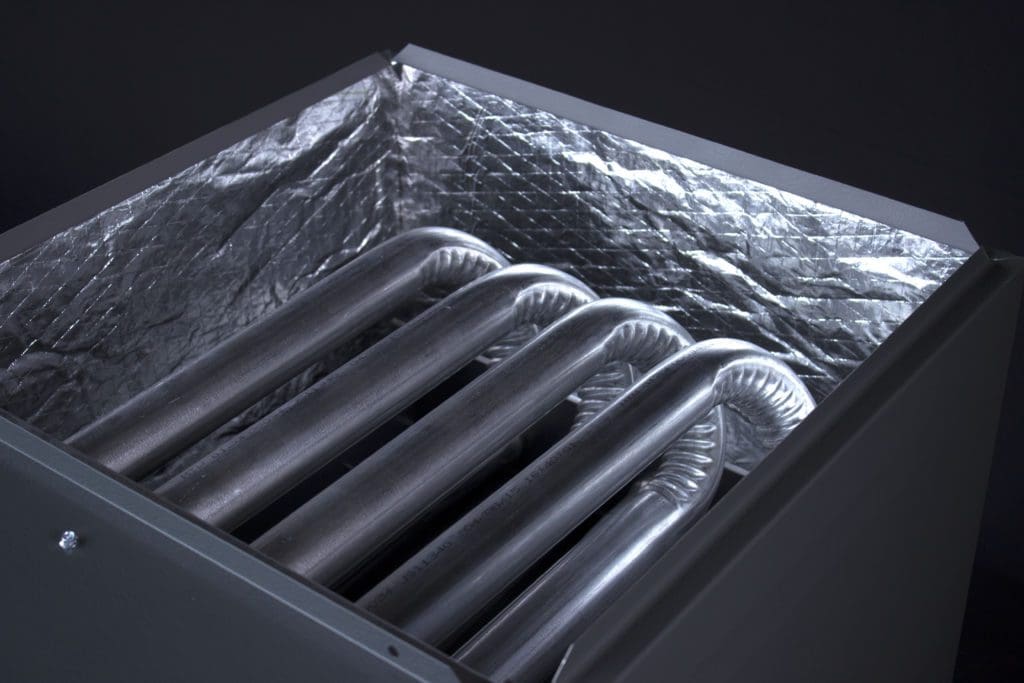
Tutte le unità di riscaldamento e condizionamento necessitano di un isolamento termico per funzionare correttamente. Gli adesivi utilizzati per incollare questo isolamento devono essere resistenti alla temperatura, all'umidità e ridurre al minimo la propagazione delle fiamme e lo sviluppo di fumi, in conformità agli standard UL 2395.

Tecbond 420 and 425 are both UL 2395 certified and offer the same bonding properties and temperature resistance as water- and solvent-based adhesives, with none of the drawbacks previously mentioned. 420 and 425 also benefit from a three-minute open time, allowing the insulation to be properly positioned before substrate contact is made.

sales@poweradhesives.com

tel: +44 (0)1268 885801

Tecbond 7784 - L'adesivo poliammidico per l'incollaggio di substrati difficili

La gamma di adesivi a caldo in poliammide di Power Adhesives offre agli utenti legami tenaci e duraturi su una varietà di substrati che altrimenti risulterebbero difficili da unire. La composizione di questi adesivi li rende molto più resistenti dal punto di vista chimico rispetto agli hot melt realizzati in EVA o poliolefina.

Tecbond 7784 is an amber adhesive designed for use on metal, wood, glass, ceramics, and many plastics. 7784 has been specially formulated to provide both high and low-temperature resistance, with strong and flexible bonds at temperatures as high as 120°C and as low as -60°C. This makes it especially useful for many product-assembly and electrical applications involving working machinery.

Come molti altri adesivi poliammidici, il 7784 è resistente alla maggior parte degli oli, dei carburanti e dei grassi, nonché a sostanze chimiche leggere. Viene comunemente utilizzato nei motori delle auto e nei filtri dell'olio non solo per tenere in posizione i componenti, ma anche per evitare che alcuni di essi entrino in contatto tra loro (come le alette del filtro dell'olio). L'uso del 7784 in queste circostanze consente di ridurre i costi dei materiali e di ottenere un metodo di incollaggio meno distruttivo rispetto alla bullonatura e alla saldatura.

Due to the difficult substrates it needs to bond and the environments it’s used in, Tecbond 7784 features a very high molten tack. This ensures an almost instant grab upon compression, removing the need for clamping or holding in place.

To complement its high tack, Tecbond 7784 benefits from a long open time, allowing users to accurately position materials before forming the bond. For users with automated processes, the extended open time removes the worry of potential adhesive failure from cold bonds or low compression times. Additionally, once set, the bond provides an oxygen barrier, lessening the likelihood of mold in oxygen- and moisture-rich environments.

Available in 12 and 15mm sticks, and 43mm slugs, Tecbond 7784 works best with the range of tec applicators. Both adhesives and applicators are developed alongside each other to provide optimal results and the best possible performance for the user. 7784 is also available in bulk pellets.

Sealed in foil-coated, resealable bags, Tecbond 7784 is protected from oxygen and moisture, giving it a guaranteed shelf life of two years – double that of comparable polyamide adhesives.

Per ulteriori informazioni, compresa la richiesta di campioni, non esitate a contattare il nostro team commerciale.

sales@poweradhesives.com

+44 (0)1268 885801

Casttec 42 - L'adesivo per calcestruzzo prefabbricato più venduto

The Casttec hot melt adhesive system can save users in the precast industry time and money. With a selection of different grades to suit a number of substrates and environmental conditions, Casttec adhesives are the go-to for any company looking for an easy and non-destructive method of holding inserts into steel and resin forms.

Best-selling Casttec 42 is a light-brown, multi-purpose precast adhesive designed to offer a strong, secure bond between wood, plastic, metal, and foam. It can be applied over a light oil, removing the need to clean surfaces before application.


Casttec 42 è stato progettato per avere un Offene zeit abbastanza lungo da consentire agli utenti di posizionare con precisione gli inserti all'interno della cassaforma. Al momento dell'applicazione, l'elevata adesività dell'adesivo garantisce un'adesione quasi istantanea dopo la compressione, senza bisogno di essere trattenuto o bloccato. Una volta indurito, l'adesivo può facilmente resistere al getto e alle vibrazioni del calcestruzzo nella cassaforma.

To aid removal and clean-up, Casttec 42 will begin to crystalise after around 8–10 hours. After 24 hours, the adhesive is brittle enough to allow the easy removal of the bonded inserts. The remaining glue can then be scraped off and disposed of.

Compared to traditional bonding systems used in the precast concrete industry, Casttec 42 is non-destructive and cost-efficient. Welding and bolting inserts in place can result in residual damage to both the form and the insert, while double-sided tapes are difficult to remove. Because Casttec 42 is easily removable with just a scraper, there are none of the additional costs or hazards associated with using solvent-based cleaners.

Available in 43mm slugs and bulk pillows, the adhesive can be used in both bead and spray guns, extending its application possibilities. Using Casttec 42 with spray guns allows the adhesive to be used on heat-sensitive substrates such as foam or expanded polystyrene without damage.

Casttec 42 si applica al meglio con la gamma tec di applicatori industriali da 43 mm, per garantire all'utente la migliore e più semplice esperienza possibile. Le pistole per colla tec sono progettate per fondere l'adesivo su richiesta, il che significa che non ci sono tempi morti in attesa che l'adesivo si sciolga. Inoltre, la struttura chimica degli adesivi, insieme alla velocità di fusione dell'applicatore, elimina qualsiasi incordatura, mantenendo le superfici pulite e ordinate.

For more information about Casttec 42 or if you would like to request a sample, do not hesitate to contact our sales team.

sales@poweradhesives.com

+44 (0)1268 885801

Tecbond 261 - L'adesivo per l'assemblaggio dei prodotti resistente ma flessibile

Tecbond 261 is a versatile and strong product assembly adhesive with the ability to bond a variety of substrates, including wood, metal, glass, ceramics, and many plastics, including polypropylene. The adhesive’s high bond strength and flexibility also make it ideal for many general-purpose applications.

Along with its high bond strength, Tecbond 261 features class-leading output, reducing effort on the glue gun trigger and ensuring the user can dispense as much adhesive as required. Additionally, 261’s longer open time allows for the accurate positioning of substrates before compression, at which point the adhesive dries quickly with enough bond flexibility to withstand small substrate movements.

With the ability to run through both hot and low melt applicators, the properties of Tecbond 261 can be tailored to suit the needs of the user. Running the adhesive at the highest temperature lowers its viscosity, increases its open time, and ensures the strongest possible bonds. When run at lower temperatures, not only can the adhesive be used on heat-sensitive substrates, but the higher viscosity also decreases sag.

Available in 12mm and 15mm sticks and 43mm slugs, Tecbond 261 has been formulated in tandem with the range of Tec applicators. This ensures both the adhesive and tool deliver optimal results when used together. For the highest possible output, we suggest using 261 with the 3000, 6000, and 7000 series applicators.

Like all adhesives in the Tecbond range, Tecbond 261 doesn’t contain any organic solvents or harmful chemicals that are given off in the application process. This negates the need for respiratory PPE. The adhesive also has a near-unlimited shelf life with no wastage, as any unused adhesive left in the applicator is simply remelted whenever the tool is next switched on.

Foundrytec – The hot melt adhesive for core assembly

Foundrytec hot melt adhesives have been designed for use with sand cores, lost foam, and lost wax/investment processes for mould and core assembly. Each grade in the Foundrytec range has been specially formulated to meet the user’s specific needs while providing fast and accurate results.

Compared to traditional water-based adhesives used in core assembly, Foundrytec hot melts have much faster setting speeds, with almost instantaneous bonding after initial compression. This allows cores to be moved, dipped, or dried immediately after construction, increasing productivity and removing the need for storage spaces required for drying.

Along with their fast setting speeds, each Foundrytec grade has been formulated to provide additional benefits for specific use cases. Grades such as Foundrytec 104 have very long open times, allowing users to accurately position core components before substrate compression, whereas Foundrytec 705 and 708 have very high heat resistance, allowing constructed cores to be dried at much higher oven temperatures.

Versamento di metallo fuso in uno stampo a sabbia

Gli adesivi Foundrytec hanno anche un contenuto di ceneri e un rischio di degassamento molto più basso rispetto agli adesivi a base di acqua e di solventi. Questi fattori sono particolarmente importanti nel processo di fusione a cera persa/investimento, in quanto riducono il rischio di porosità o imperfezioni nello stampo finito. Inoltre, le formulazioni in massa utilizzate nel processo di fusione a cera persa sono progettate per massimizzare la stabilità termica, riducendo al minimo l'accumulo di Viskosität all'interno delle vasche di contenimento e garantendo un'applicazione senza corde più a lungo.

All grades in the foundrytec range are available in 43mm slugs and are compatible with the 3400, 6000 and 7000 series of tec bead applicators. The adhesives and tools are designed to work in tandem with each other to provide the user with the highest possible output with minimal effort. Additionally, Foundrytec adhesives are clean to handle, with no organic solvents or harmful chemicals present, and have a near-unlimited shelf life.

Per ulteriori informazioni o per richiedere un campione, non esitate a contattare il nostro team commerciale.

sales@poweradhesives.com

tel: +44 (0)1268 885801